Home | Site Map | Facilities | User Guide | Schedule | Forms | Research | News | Staff | Links
SPEAR status
Beamline status
Support Staff Schedule
Beamline Information
PX users mailing list
Robosync
JCSG
SSRL
SLAC
Stanford University
Staff Area

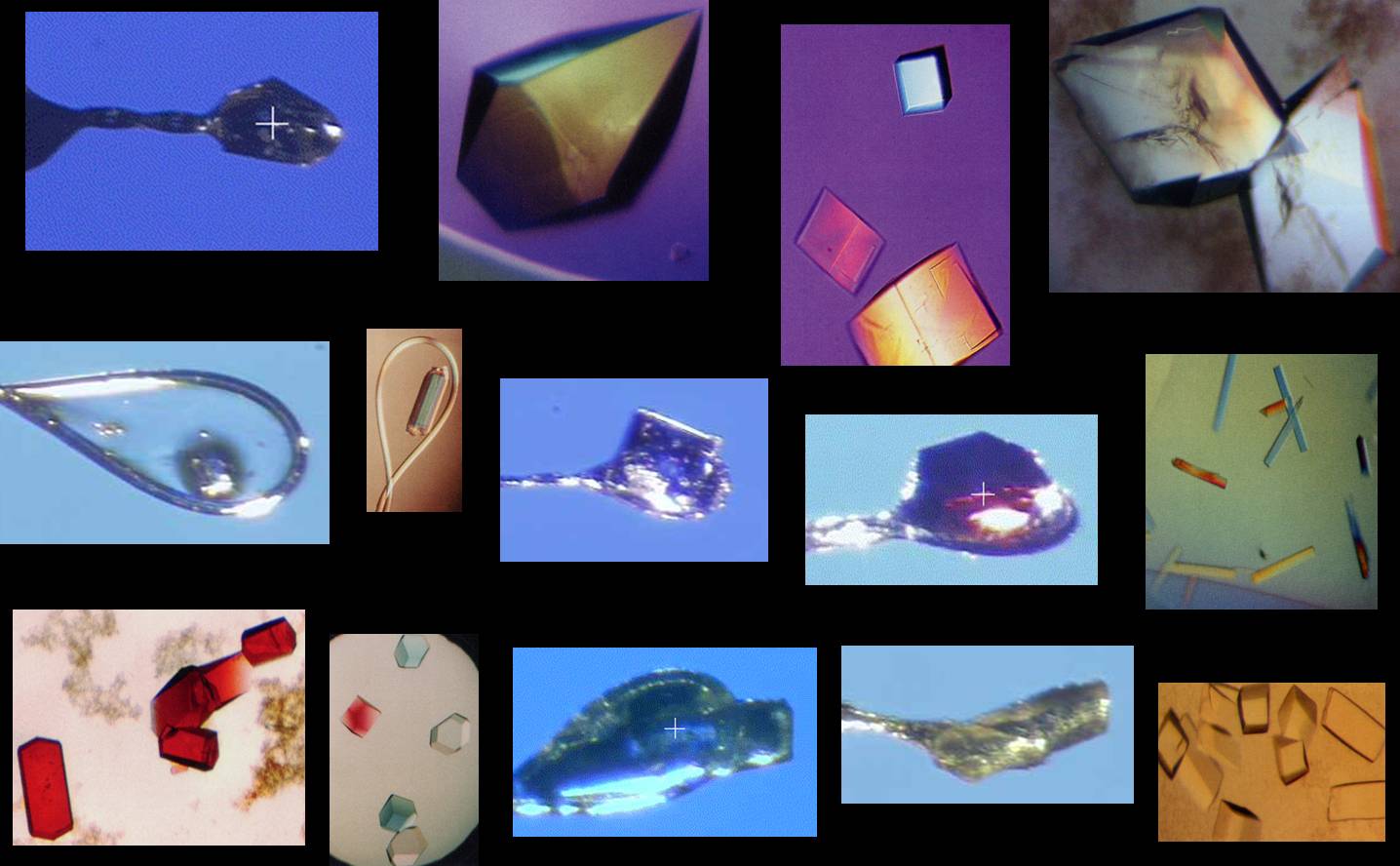
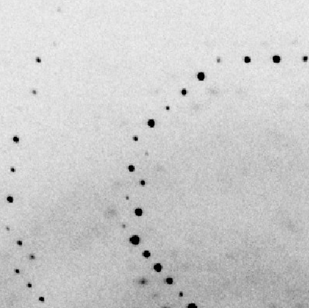
Macromolecular Crystallography is a technique used to study biological molecules such as proteins, viruses and nucleic acids (RNA and DNA) to a resolution higher than ~5 Å. This high resolution helps elucidate the detailed mechanism by which these macromolecules carry out their functions in living cells and organisms. Protein molecules can crystallize under regulated conditions; the crystals are made up of multiple copies of the molecule arranged in a regular 3-dimensional lattice. The x-rays deflected ("scattered") by the atoms in equivalent positions in the crystal lattice concentrate into sharp intense spots (crystal diffraction pattern). The macromolecular structure can be determined by analysis of the intensities and positions of the diffraction spots.

The Macromolecular Crystallography Group at the Stanford Synchrotron Radiation Laboratory operates and develops beamlines providing state of the art macromolecular crystallography facilities and support for visiting researchers. Of the beamlines currently operational, three (BL9-2, BL1-5 and BL14-1) are designed for MAD experiments, two side stations (BL9-1, BL7-1 and BL11-1) are also MAD capable at slightly reduced energy resolution. BL12-2, with an undulator source, is optimized for microfocus applications, but can also be used for conventional experiments (MAD, screening, etc.). Researchers from universities, industry, and government laboratories around the world can gain access to the beamline facilities by submitting a research proposal. Updates on beamline facilities and other user information are posted to the px-ssrl mailing list.

News:

    Beamlines are being prepared for the 2009-2010 User Run
Funding
Agencies


Collaborative
Research
Institutions
Caltech
Genentech
Hauptman-Woodward Medical Research Institute
Roche
Scripps Research Institute
Stanford 
   University
Beam Line1-57-19-19-211-112-214-1
Flux @200 mA (p/s)2.5x10102.4x10119.0x10106.3x10115.9x1011 1.6x10127.2x1010
ExperimentMADMADMADMADMAD CommissioningMAD
Wavelength (Å)
Energy Range (keV)
0.85-2.06
6.0-14.5
0.97-1.76
7.0-12.7
0.77-0.98
12.6-16.2
0.85-2.06
6.0-14.5
0.82-1.17
10.6-15.1
0.72-1.86
6.67-17.2
0.95-2.06
6.0-13.0
Beam Size (µm)100-20050-200100-20050-20050-300 20-20050-200
DetectorQ315RQ315RQ315RMAR325MAR325 Pilatus6MMAR325
Detector Size (mm2)315x315315x315315x315325x325325x325 431x448325x325
Xtal-Detector (mm)90-540101-65095-650100-65090-650150-65095-650
Throughput (images/minute)2020201313 9013
BL phone (+1-650)926-5215926-5271926-5291926-5292926-8648926-5212926-5141
Support phone (+1-650)307-4151283-4556714-9411714-9417714-9414714-9405307-4151
Common Facilities
Remote Access Remote access tools Sample Database
Spreadsheet templates
Remote Unix Desktop Web-Ice
Beamline Hardware Stanford Auto-Mounter (SAM) Xe/Kr Incubation Toolboard Other Tools
Computing Resources Control Software Blu-Ice Computers Software Data Backup