|
Macromolecular Crystallography is a
technique used to study biological molecules such as proteins, viruses
and nucleic acids (RNA and DNA) to a resolution higher than ~5Å.
This high resolution helps elucidate the detailed mechanism by which
these macromolecules carry out their functions in living cells and
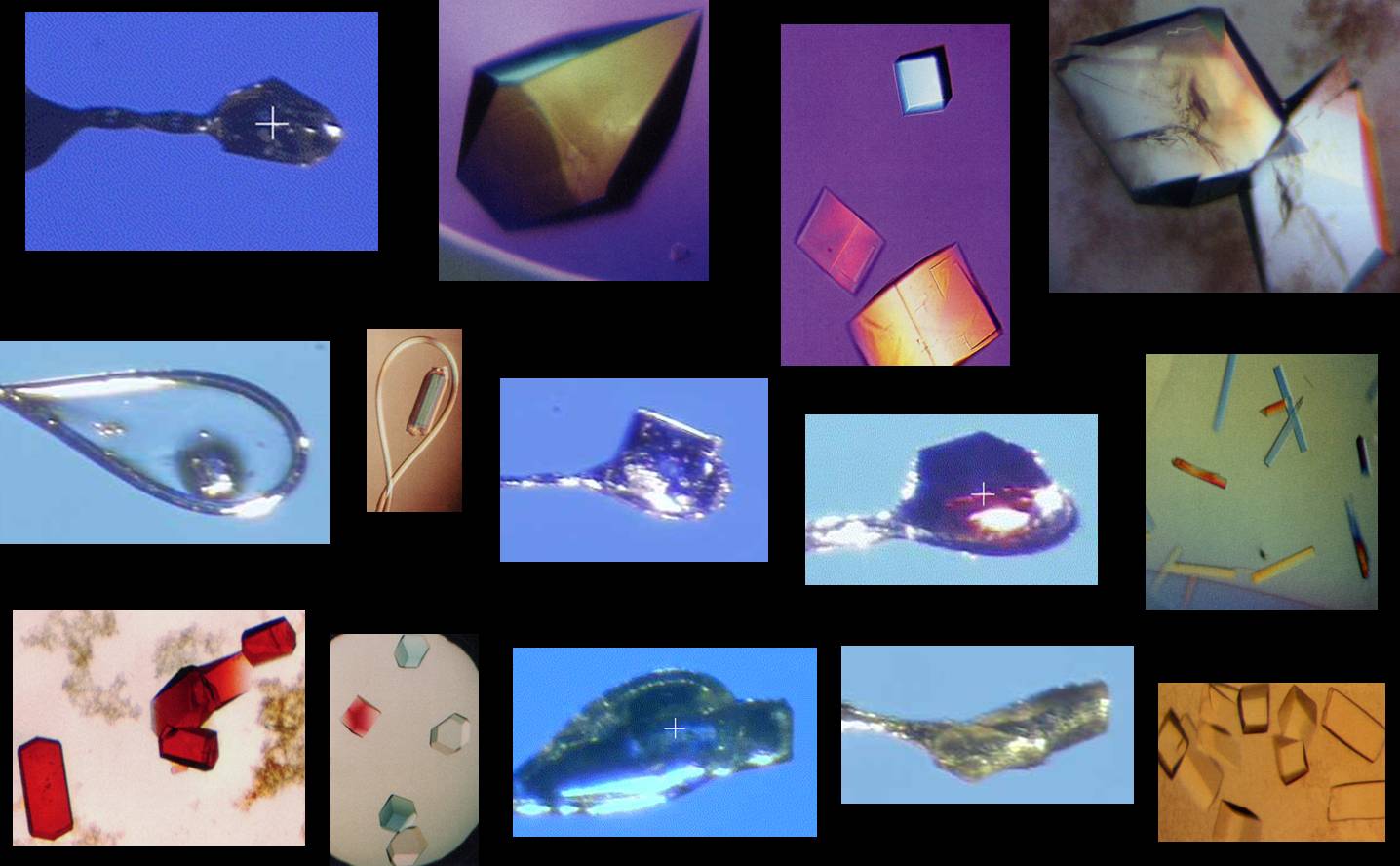
organisms. Protein molecules can crystallize under regulated
conditions; the
crystals are made up of multiple copies of the molecule arranged in
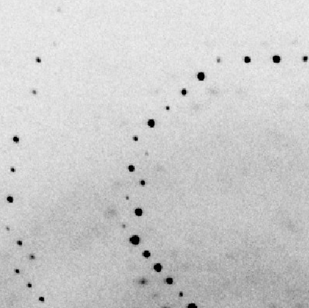
a regular 3-dimensional lattice. The x-rays deflected
("scattered") by the atoms in equivalent positions in the
crystal lattice concentrate into sharp intense spots (crystal
diffraction pattern). The macromolecular structure can be
determined by analysis of the intensities and positions of the
diffraction spots.
The Macromolecular Crystallography
Group at the Stanford
Synchrotron Radiation Lightsource operates and develops beamlines
providing state of the art macromolecular crystallography facilities
and support for visiting researchers. Of the beamlines currently
operational BL12-1 and BL12-2, with an undulator source, are
optimized for microfocus applications, but can also be used for
conventional experiments (MAD, screening, etc.), while BL9-2 and BL14-1 are designed for MAD experiments.
Researchers from universities, industry, and government laboratories around the world
can gain access to the beamline facilities by submitting a
research proposal.
Save the dates: The
course RapiData 2024 on Data Collection and Structure Solving will take place from April 29 to May 4, 2024 and we are back in-person!. See the course announcement
for more information. Application deadline: January 31, 2024.
For more news, updates on beamline
facilities and other user information are posted here.
|